Banking Fraud

Banking Fraud
This is an umbrella term for a wide range of frauds that involve online banking systems. The scams themselves may differ in nature and con artists employ various extortion methods. However, they all use the official financial institutions as a cover. Victims usually trust the bank’s authority and legitimacy so they don’t question the fraudulent setup. Banks are aware of this problem, and they are constantly striving to improve their safety measures so they would properly guard their clients’ funds. Unfortunately, the scammers aren’t idle and they are continuously searching for new ways to dupe people out of their money. The financial loss made from these types of fraud may range from several hundred dollars to hundreds of thousands.

Authorized Push Payment Fraud
This is a scam that targets businesses rather than individuals. Authorized Push Payment (short for APP) Fraud exploits companies’ diligence. A scammer would send a fake invoice to a company requesting a payment. In most cases, the con person is presenting themselves as an official firm. Of course, they are charging for non-existent goods and services while they offer their personal bank account. Many businesses don’t suspect the legitimacy of the bill. They pay it off, and the money ends up in the scammer’s bank account. As these types of scams are difficult to spot, they can last for long periods of time. A business might pay out the fraud regularly, gradually increasing their financial injury. The con artists usually transfer the money to numerous accounts making it difficult to trace.

Deposit Refund Scam
A scammer will contact an individual directly by email or even by phone. They will provide an explanation that they have accidentally deposited money into the target’s account. Naturally, they would like to get it back. The con person will provide some sort of proof of payment which is plagiarized. The victim believing in the honest mistake pays the money to the fraudster. In the end, the victim incurs financial injury to themselves and the scammer disappears.

Vishing
This scam is aptly named with a portmanteau of Voice and Phishing since it combines these two. An individual receives a call from a con person posing as a bank officer. In most cases, they explain that an irregularity has occurred and they would need to take safety measures. The fraudster precedes to ask the target a series of questions as a form of a security check-up. The inquiry is designed to elicit personal and financial data along with credit card info. The victim, trusting they are helping a security officer, gladly provides the answers. The scammer can use all the information to steal the money or commit identity theft.
Payment Card Fraud
Scammers don’t need your physical credit card to commit fraud, but they will use all the means possible to get your credit card info. There are various scams to go about this. Some include secret card readers to extract the victim’s data, others involve various ways to trick people into divulging their info. For a more detailed view on the matter, we invite you to check our page on credit card fraud.
What to Do in Case of an Online Banking Scam?
People fall victim to online banking scams every day. We understand that it may seem you’ve lost your money, but we assure you that there is a way to retrieve it. Our team in Funds Recovery has a wide experience with various types of banking scams. Chances are we have already dealt with a similar case to yours, so we can offer a financial remedy. Take matters into your hands and make a first step towards recovering your stolen money.
Email Compromise Scams
Email Compromise Scams
Email compromise scams are a type of cybercrime in which attackers gain unauthorized access to a person’s email account or impersonate a trusted email sender to deceive victims. These scams are designed to steal sensitive information, money, or both. 🔍 Types of Email Compromise Scams Account Takeover Hackers gain access to an email account and use it to send fraudulent messages to contacts or request money. Business Email Compromise (BEC) Criminals impersonate company executives, employees, or vendors to trick organizations into transferring funds or revealing confidential data. Sextortion Scams Scammers claim they have hacked the victim’s email and threaten to release private or embarrassing information unless a ransom is paid, often in Bitcoin.
⚠️ Common Signs
Unexpected password reset notifications Emails sent from your account without your knowledge Suspicious login alerts from unknown locations Requests for urgent financial transactions Messages containing threats or unusual language 🛡️ Prevention Measures Use strong, unique passwords for email accounts Enable two-factor authentication (2FA) Avoid clicking on suspicious links or attachments Regularly update security settings Be cautious when sharing sensitive information
🛠️ What to Do If Compromised
Change your email password immediately Review account activity and security settings Log out of all devices Inform your contacts about the breach Scan your device for malware Report the incident to your email provider
✅ Conclusion
Email compromise scams are increasingly common and can have serious consequences. Staying informed, practicing good cybersecurity habits, and responding quickly to suspicious activity are key to protecting personal and organizational data.
Credit/Debt Card Scam

Banking Fraud
When it comes to credit card scams, it is not a skillful hacker you should be worried about. Con artists have realized that they don’t have to hack into your account to grab your funds. All they need is your credit card number and personal data. In this section, we highlight three of the most prolific methods used by criminals.

Fake Calls
There is an abundance of schemes that rely on directly contacting a target with the goal of eliciting sensitive information. In case of this type of fraud, they are out for your credit card details. The type of calls can range from non-existing charity organizations asking for a donation, to credit card security impersonators who are checking your information as a part of a safety check for a suspicious purchase. Regardless of the background story, the scammer is trying to get your personal and credit card information for various reasons. The obvious one is to access your current funds, but a more problematic issue ends up being identity theft. Con artists abuse their victims’ personal information to take out loans, make expensive purchases or incur other types of debt.
Phishing
Similar to fake callers, this scam is also trying to extract your personal info. However in this case emails are the main point of entry. These emails usually present themselves as official companies and institutions and almost always contain a call for action. You might be offered a job opportunity by a head-hunting agency. Additionally, a phishing email may pose as a security breach warning that prompts you to verify your account. Once the target clicks on a link in the email they are relegated to a site that looks genuine enough. It is illegitimate, though, and its only function is to extract your private data. Once the scammers get a hold of your personal information they can then use it for nefarious purposes.
Credit Card Skimming
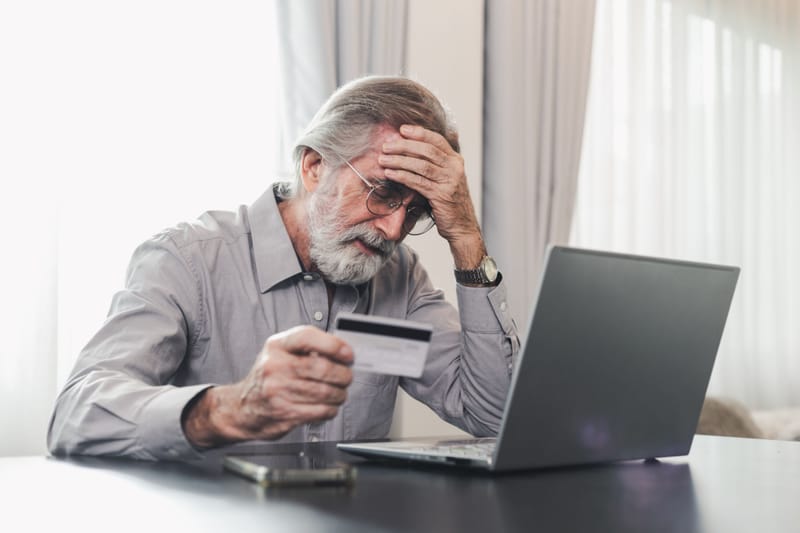
This form of data extraction is difficult to detect as it can occur without the victims’ involvement. It relies on an electronic gadget whose purpose is to read, store and even transmit personal information from the credit card. They basically skim your data off your card. These specialized readers are fitted secretly on various types of devices. Skimming may happen while you’re using your card to pay for groceries, getting a bill at the restaurant, or taking up cash at an ATM.
Public Wi-Fi
Who doesn’t like free internet?! Well, there’s a reason why people are cautioned when accessing public Wi-Fi networks. They might not be secure and you’re opening your device to malicious tampering. Scammers use this fact to breach into the network system and they can exploit it to get into victims’ phones and computers. Once inside the device, they can monitor any actions or browse through apps, collect data, or worse. Another deceitful scam involves setting up a false Wi-Fi access point. The device might connect to it automatically or an unsuspecting user enters it willingly. The victim is unaware that they aren’t connected to an actual Wi-Fi but to a system that enables scammers to monitor and tamper with their smartphones.
What Can You Do in Case of a Credit Card Scam?
If you suspect that malicious parties might have acquired your credit card info, or you know someone who has been a victim of a credit card scam, the important thing is to react promptly. Best you can do is contact a professional to mitigate the damage. We at Funds Recovery would like to offer our services to help you combat this troublesome problem. Our team has particular experience in dealing with credit card fraud. You should know that you have options and we can help you expedite the process of your fund recovery. In the case of small-scale credit card fraud and unauthorized charges, we can offer quick solutions. Most of these problems we can resolve for you in a matter of days. Unfortunately, identity theft cases might take considerably more time. Our team of professionals will evaluate your case and we will provide you with an optimal plan for damage control and fund recovery. Take matters into your own hands and contact us for a free consultation.
Crypto-Currencies Scam

Crypto-Currencies Scam
The entire cryptocurrency market has reached a total traded capitalization of nearly $2 trillion dollars in just 10 years. The price of a single bitcoin reached $18,737.60 by 18 December 2017, with a global FOMO frenzy, but then the price of bitcoin tanked to as low as $3,209.76 by 15 December 2018. The volatility of the cryptocurrency has not however deterred investors trying to make a quick buck and this is where the scammers take advantage of innocent victims. Although blockchain tech is a relatively safe technology, cybercriminals manage to find breaches and loopholes to break into the websites and compromise users’ digital wallets and funds. It goes without saying that the laws protecting investors of ICO are far from perfect, so it’s easy for founders to commit serious financial crime and get away with it. The term “Wild West” is often associated with cryptocurrencies and for the most part, it is true, as global regulation is still a work in progress, with governments struggling to keep up with the pace of innovation. People often buy cryptocurrencies using a credit card/ wire transfer or any type of method to move funds to an exchange and in some cases directly through the scam websites, and this is where the liability can be attributed to the card issuers and banks, as they are supposed to safeguard customers funds.
Crypto
Investment Scams will often get you to transfer cryptocurrencies as they are anonymous it is very difficult for an untrained to track and recover their funds. Below are two of the most prolific scams in recent history: In 2015 Ruja Ignatova, along with her brother, Konstantin Ignatov, ran “OneCoin” which claimed to be a new and better version of the cryptocurrency Bitcoin and managed to steal an incredible $5 Billion from people around the world. They held elaborate and glamorous events where they pitched OneCoin to potential investors and claimed it was going to change the world and usher in a new world of financial freedom. Those who invested early were told they would be at the start of a revolution. However, nothing actually existed, OneCoin didn’t have a blockchain, a cryptocurrency or wallet. Ruja Ignatova vanished in mid-2017 and is being charged with money laundering offenses in several countries. Another well known MLM cryptocurrency scheme was a company called “Bitconnect” that had a total capitalization of trade in excess of $1.5 Billion just before the entire house of cards came tumbling down on 16 January 2018, and with it many thousands of people lost all of their investments to what turned out to be a global Ponzi scheme. The scammers were accused of fraud, misrepresentation, and misappropriation in connection with bitcoin/BCC trading. The crypto scammers are now being sought by law enforcement authorities in virtually every major country.
Common types of Cryptocurrency Scams
Cryptocurrency scammers are constantly inventing new ways to steal your coins & tokens many people have reportedly been a victim to one of these five types of scams below. The Pump & Dump The crypto scammers “pump up” or hype up (pump) a cryptocurrency that they own in bulk with the aim to sell it (dump) once the value peaks due to the increased demand that they themselves have generated. In most cases, however, they will actually convince newbie inexperienced investors into colluding with their scam with false promises of massive returns. Sadly these naive people often find out too late and are then left holding huge amounts of worthless cryptocurrencies. Fake Investment Syndicates Often the only people who profit from online “syndicates” are the scammers who run them. The sites look incredibly legitimate and, similar to binary options sites, they also feature photos of happy members with large houses, sports cars or in exotic locations, and claim to have made megabucks by investing with the hidden cryptocurrency pros who stand behind the curtain. The last time you see your money will be when you hand it over to the scammers and then suddenly the customer support is too busy to assist with your inquiries about returning investments or missed deadlines for dividends.
Fake Exchanges
They’re all over cyberspace, and for first-time investors, they’re hard to distinguish from the legitimate ones. In December 2017, Korean authorities closed down one of them, BitKRX. What was particularly pernicious was that BitKRX usurped the last three letters of its name from KRX, the Korean Stock Exchange, in order to purposely misrepresent itself. Fake Wallet This scam is custom-made for cryptocurrencies. Since “altcoins” are bytes of data, rather than metal, they have to be parked somewhere online in what is euphemistically called a “digital wallet.” Innovative scammers with good marketing skills set up their own digital wallets advertise aggressively for customers to come along and once they deposit their cryptocurrency in them, it disappears forever.

Ponzi and Pyramid Schemes
If cryptocurrency investments are, as they say, guaranteed to quickly appreciate in value at a skyrocketing rate, why would someone offer you a higher interest than the market currently generates? The most obvious answer is because the offer is a red light for a cryptocurrency Ponzi or pyramid scheme. The phenomenon will continue, since other such online schemes employ the same 200%-in-90-days business model, and are bound to collapse as well. The main difference between the operators of these sites and Charles Ponzi, for whom the scheme is named, is that these guys, unlike Mr. Ponzi, are anonymous.
Telegram messaging
Using the ‘Telegram messaging” platform has its risks also and it is often used by scammers to trick victims into thinking they are dealing with real “admins” just by changing their username so it looks official, essentially they will add a letter or even “admin” next to their username. Once they have started a conversation with you they will take time to gain trust and offer help and even appear to be very sympathetic to your needs. However, they will soon ask you to transfer cryptocurrency as part of an admin process to verify your details or they will try to get you to send the private keys to your wallet. Many people new to cryptocurrencies are very trusting in the beginning and are not sure about what to look for to spot the scams and the scammers rely on this and take full advantage to steal your money. Telegram is also full of bots and spam which often have links to fake sites or to sites that can install phishing links that scrape your data and allows the scammers to get more information about your online presence, so we recommend never to click on these links.
Online Dating Scams

Online Dating Scams
The world of online dating can be an exciting way to meet potential partners. However, you will quickly discover that things are not what they seem on many sites and profiles. Though it is one of the fastest-growing ways for singles to meet each other and form relationships, there are definitely those who use the sites for dishonest purposes. Some of the more common online dating scams also referred to as “romance scams” discovered in recent years are mentioned below. These dating scams refer to clues that the person on the other end of a profile is untrustworthy, or that the website itself is the scam. We hope that this list will keep you well-informed enough to continue dating online safely. Their end goal is to get you to trust them and send them money or disclose information that enables them to steal your identity or money. These dating scams will gain your trust by using information from your social media and deploy what is called a “long game” scam.

Facebook & WhatsApp
You might get a direct message from someone that you do not remember, they will probably start by saying that you went to the same school or college and that you were in the same circle of friends. Then they will start a general chat and this could go on for several weeks, in order to build trust and create familiarity with shared hobbies, interests and travel experiences.
Social Media Scams
Then they will start to ask for money with the most inventive reasons but somehow convince you that this is the right thing to do and certainly use the emotional connection they have created to manipulate you and lower your resistance. The scammers will say they want to visit you and can you perhaps pay for their travel expenses, visa, and other official travel documents and that they will pay you back during their visit with you. Another common ploy is that they need to have surgery or other medical expenses or for a parent basically, any request for money should be an immediate red flag and make you aware that you are being scammed. In recent years there has been a significant increase in large data breaches which have lead to millions of peoples private data being released into the public domain and sold on the dark web. Some of the biggest companies in the world have been breached most notably British Airways, Cambridge Analytica, Facebook, eBay, Google+, Marriott International, Quora, Saks, T-Mobile and Yahoo. Resulting in private customer data being used to conduct online banking fraud. We are here to help you recover your lost funds from the banks and credit card providers with our extensive knowledge in fraud detection and years of experience in dealing with these matters. We have a high success rate and many satisfied customers. Below we take a deeper look at some of the most common types of scams. You should be aware that this is not an extensive list, and scammers are constantly developing new techniques.
Dating Websites Require In-Depth Personal Information
All dating websites will ask for a certain amount of information in order to match you with people who will have similar interests. However, this information should be limited to personality details and interests rather than financial information or anything that might be useful to someone wishing to steal your identity.

The Online Dating Profile Has Only Professional Photos
Though it’s possible that an actual model with a portfolio was matched with you on a dating site, it’s much more likely that the profile is fake. Fake profiles are generally used to mine information from unsuspecting singles, or to convince you to download malware (generally disguised as a photo file) that will steal your private data.
The Person Gets Very Emotional Too Soon
Have you received a long email or message detailing how much someone you’ve just been matched with has been “waiting for someone like you forever”? This is a typical situation to worry about, and best to avoid people that are overly emotional before meeting them in person. The emotional approach is another way the scammers try to gain sympathy and start asking for money.
CFD Trading Scam

CFD Trading Scam
Contract for difference, CFD for short, allows traders to practice lucrative business strategies with the flux of the world market. Unlike a typical stock exchange, the trader doesn’t own any assets or commodities. With the CFD the buyer is obliged to reimburse the seller the difference between the values of an asset at the moments of forming and closing the contract. This means that the interested parties will decide on the value of a commodity at a specific point of forming a deal. Eventually, when this arrangement closes the buyer and seller will assess the current value. If there has been a rise in the price, the buyer loses money as they have to pay out the difference. However, if the value has experienced a drop, the buyer earns from the transaction, as the seller has to reimburse them. This is a perfectly legitimate form of market trading in most countries all over the world. It provides many advantages for financial experts, though it carries risks as well. As it can be high leverage trading, it means that earnings and losses are high. Scam artists exploit this promise of a financial gain while falsely assuring that they can negate any form of risk.
Risk-Free Investment Scam
Fraudulent trading platforms advertise all over the internet. They will try to entice their targets by offering wonderful CFD trading opportunities. In most cases, they boast that they have professional insight and knowledge, or perhaps revolutionary software that can predict market changes. This is all with the goal to lure victims into giving them funds since their platform is bound to generate profit. As a rule, if the trading service claims they have a fail-proof strategy for making you money – it’s a scam. No official broker or financial company can guarantee with 100% certainty the outcome of CFD trading. That is all a ruse to make an excited investor give them money. The site might also charge for a monthly membership along with trading funds. The scammer mimay act like the target is gaining profit, but once a person wants to access their funds, problems arise. The victim can’t get their money back easily, and soon enough they discover they can’t withdraw it at all. They are unable to reach the responsible parties and all the contacts lead nowhere. Their money’s gone along with the scammer.
Unlicensed Broker
Most scammers prey on their targets on social networks and official sites. They contact a person by impersonating a financial expert with unique knowledge of the market. These fraudsters offer can’t-miss-it opportunities and exciting promises. They use manipulation tactics to slowly lull their victim into trusting them until they finally give them money. In many cases, they are playing the long game, scamming a person for huge amounts. As alluring as these self-promoting experts are, there is a warning signal you can always check. Try to investigate whether they have the broker’s license or whether they have an official business. Additionally, try to find any proof of their dealings and success stories. Scammers work from the shadows. If a trader is legitimate, there’s bound to be proof of his work on the internet.
Revolutionary software
Groundbreaking apps and programs are typical selling points of many frauds. Almost always the software has magical-like abilities, in this case, it promises to predict the price fluctuations, making the CFD trading a sure win. It boasts that it holds an algorithm which analyses past trends in order to anticipate the future ones. This is false advertising and the victim pays a hefty sum for worthless software. In certain cases, the program turns out to be malware which steals the victim’s personal information. The fraudsters later use it for identity theft incurring even more financial damages.
What Can You Do in the Case of a CFD Scam?
Regrettably, the trading market is full of scammers who are preying on investors. If you or your loved ones have fallen victim to a CFD Scam, we assure you that you are not alone. Our team in Funds Recovery has successfully solved many types of frauds connected to the trading market. Our experts can evaluate your case and make the optimal plan for recovering your money. Don’t hesitate and make your first step towards recovering your stolen funds. Contact us now and get a free consultation.